
Table Tennis Betting in New Zealand: What Punters Need to Know
 Available in US
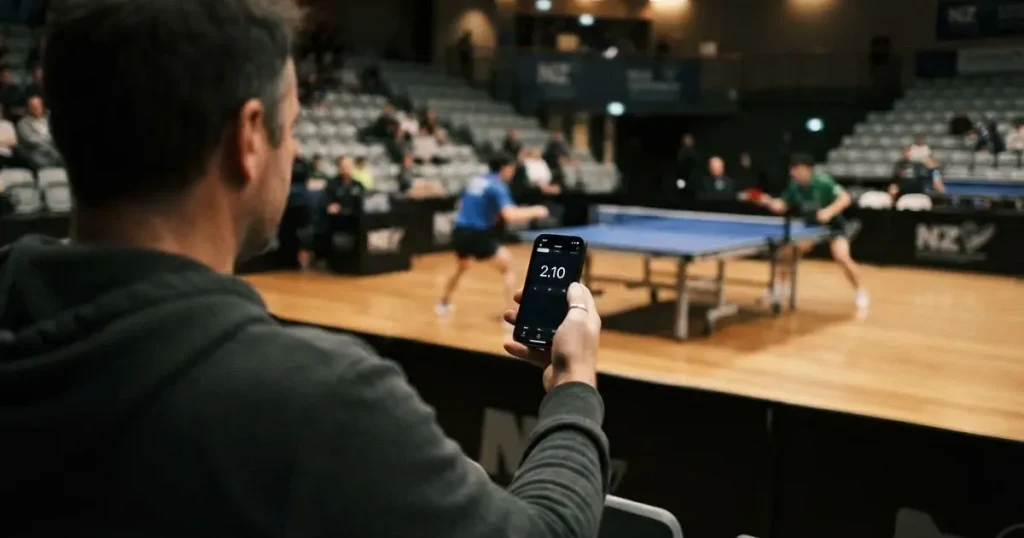
Table tennis occupies a strange corner of the New Zealand betting market. The sport is fast, the tournaments run year-round across Europe and the ITTF World Tour, and a single match rarely lasts longer than half an hour. For a punter who wants action without waiting three days for a cricket result, that pace is the reason the category exists at all. The complication is that New Zealand is not an open market. Only one operator group may lawfully offer sports and racing bets to people physically in New Zealand, and that exclusivity was locked in by statute in 2025. This page works through what that means in practice: which brands a New Zealand resident can actually use, how table tennis odds are built, what the bookmaker’s margin does to a price, where live betting and cash out fit, and what the responsible-gambling framework looks like when the legal choice is also the only choice.
The data on this page was checked as of October 30, 2026 against the Racing Industry Act 2020 and the Racing Industry Amendment Act 2025 (in force since 28 June 2025), the New Zealand Gambling Act 2003, and the App Store listings for the two TAB NZ applications.
The Legal Picture: Why TAB NZ and Betcha Are the Only Two Names on the Board
Since 28 June 2025 no operator other than TAB NZ may offer racing or sports betting to a person in New Zealand. The rule sits in section 74AAA of the Racing Industry Act 2020, inserted by the Racing Industry Amendment Act 2025. The Department of Internal Affairs (DIA), which regulates gambling under the Gambling Act 2003, told providers serving New Zealand to withdraw with immediate effect when the law changed. There is no application process for another bookmaker to enter the market and no licence register, because the statute does not contemplate more than one lawful operator.

What that means for a New Zealand punter is straightforward in principle and awkward in practice. In principle, anyone who wants to bet on table tennis in New Zealand has two online brands to choose from: TAB and Betcha. Both belong to TAB NZ. In practice, the choice between them is not the choice the punter is making on most other betting sites. They are not rivals competing on price, on markets, or on the quality of their live betting product. They are the same operator wearing different uniforms.
The partnership that runs them sits with Entain New Zealand. In 2023 TAB NZ and Entain signed a 25-year operating agreement. The financial shape of that deal is unusual for a public-facing monopoly: Entain takes a 50/50 share of gross profits, TAB NZ receives at least NZ$150 million a year for the first five years, and Entain paid a one-off NZ$100 million to the racing sector as part of the arrangement. A punter using TAB and a punter using Betcha are feeding the same pool, and the same economics apply to both apps.
The grey area is offshore. New Zealand law does not block access to overseas sportsbooks. It puts the liability on the operator that chooses to serve New Zealand residents in breach of section 74AAA. Section 19(4) of the Gambling Act 2003, also inserted in 2025, says an individual cannot be convicted simply for placing a bet with such an operator. No published penalty for the player was found. DIA’s published position is that offshore operators may be in jurisdictions with minimal consumer safeguards, may not return unspent credits, and may not pay out large wins, and that those risks fall on the punter. Tax on those operators is a separate question: an offshore operator supplying New Zealand residents pays the online gambling duty (12% of profits since 1 July 2024, rising to 16% from 1 January 2027), but paying duty does not make the offer lawful. The next several sections work through what TAB NZ’s two brands offer, how those offers compare with the offshore brands New Zealanders may encounter, and what each costs the punter in margin and in missing consumer protection.
Player Protection and the New Zealand Responsible Gambling Framework
The legal monopoly carries with it a regulated player-protection regime. TAB NZ must keep the risks of problem and underage gambling minimised, and pays a Problem Gambling Levy of 0.74% in force from 1 July 2025 to 30 June 2028. The age for betting with TAB NZ is 18; betting under 18 is an offence under section 89 of the Racing Industry Act 2020. Land-based casinos are 20, a number that does not carry over to online betting. Account opening at TAB NZ requires a verified New Zealand address and ID, and self-exclusion applies across both TAB and Betcha.
The safer-gambling tools available through the TAB NZ app are deposit limits, time-outs and self-exclusion. Help is provided through the free Gambling Helpline (0800 654 655, text 8006) and Safer Gambling Aotearoa. There is no single national online-betting exclusion register, and the register that the Online Casino Gambling Act 2026 will require covers online casinos only. That same Act licenses online casino gambling and does not extend the betting monopoly: TAB New Zealand winning the right to apply for a casino licence is a separate matter from the sports-betting exclusivity under section 74AAA.
The offshore picture is thinner. None of the brands reviewed below for comparison offers a New Zealand harm-minimisation framework, a New Zealand complaints route, or a regulator that can compel a payout. Their house rules on deposit limits, time-outs and self-exclusion exist; their enforceability for a New Zealand resident is a different question. DIA does not publish statistics on disputes with offshore brands, and no source establishes a recovery route for a New Zealand punter who is not paid by an unlicensed operator.
Live Betting and Cash Out in Table Tennis
Table tennis is built for live betting. A match typically takes 20 to 40 minutes, the scoreboard shows the game state in real time, and a momentum shift after a missed set point can flip the odds within a single rally. TAB NZ’s apps list live betting on the events they cover, and any statutory restriction on in-play markets was not found. The published betting rules define Win, Place and the racing-specific bet types (Quinella, Exacta, Trifecta, First4, Quaddie, Big6, and the running and daily doubles), and Multis including Same Game Multis whose legs come from one event. Live betting on table tennis specifically, as a category inside the live section, is what a punter checks the TAB NZ or Betcha app for directly; the betting rules themselves describe mechanics rather than the sport-by-sport menu.
Cash out closes a position before the event settles. For a multi-leg Same Game Multi on a table tennis match, the cash-out value moves with the live odds as each leg completes. TAB NZ’s cash-out feature, where offered, prices that exit against the same margin the pre-match odds carried, which is to say that the cash-out value is never the full expected value of letting the bet run. A punter who routinely takes cash-out offers trades variance for certainty and pays for the certainty in margin.
The offshore brands below each carry their own live-betting and cash-out position. Betalright’s sportsbook includes Live Betting and Virtual Sports sections. Thunderpick offers cash out on its sportsbook alongside its esports-first menu. Rooster.bet’s sportsbook shows Live, Sports Promotions, Results, Schedule, E-sports and Predictions sections with odds in six formats. RTbet carries live betting and virtual sports. Sportaza’s terms set out cash out before the event or market is finalised, a Bet Builder feature (with the rule that if one selection is void the whole betslip is void), multiples, Asian lines and interval markets in 1, 5, 10 or 15 minute ranges. Glorion covers pre-match, live, virtual, horse racing and esports. None of those features is offered under a New Zealand licence.
Predictions and Strategy: What Helps and What Doesn’t
A punter who wants to beat the market needs to look beyond tipsters. A table tennis match has a real favourite. The market for that favourite prices the favourite close to even money on most events, which means the bookmaker’s margin sits inside a price that already looks generous. A tip that names the favourite is the same bet the market already prices. A tipster who claims a strike rate above the margin-adjusted break-even rate, sustained over thousands of bets, is perhaps arbitraging from inside knowledge, and no public tipster publishes audited returns.
What does help is the structure of the sport. A table tennis match is the best of any odd number of games, most often best of five or seven. A game is won by the first player to reach 11 points, and at 10-all the first player to lead by two wins. Service alternates every two points, and at 10-all each player serves for one point in turn. Those mechanical facts drive in-play markets. A player serving at 10-9 has the better of the next point, all else equal, because service at 10-all alternates one point at a time. A handicap market on games is settled on the structure of the match rather than the result.
What does not help is past form treated as predictive in isolation. The ITTF World Tour runs a deep calendar: World Championships, World Cup, WTT events, continental opens, and the pro tour. Form is volatile. A player reaching a semifinal one week can lose first round the next to a qualifier on home boards. Head-to-head records carry some signal because players meet repeatedly on the tour, but the signal is small relative to the margin a bookmaker takes.
The bankroll management side is what a serious table tennis punter actually works on. A flat stake as a fixed percentage of bankroll keeps variance from ending a session. A maximum-stake rule on a single match (rarely above 2% of bankroll for a multi-leg bet, lower for a Same Game Multi) keeps a bad beat from doing permanent damage. A stop-loss after a session down a set amount stops chasing. None of those is a tip. All of them are the work the tip leaves undone.
Bet Types and How Odds Are Built in Table Tennis
The standard markets on a table tennis match are head-to-head (who wins the match), handicap on games (a player starts the games count up or down by a line), total games over or under a number, and set-correct-score markets such as 3-0, 3-1, 3-2 in a best-of-five. Same Game Multis combine legs from a single match: player A to win, over 3.5 games, and a handicap on the first game. Multis across matches multiply the odds of the legs into one price.
Handicap markets deserve a closer look because they are where the bookmaker’s margin is widest. A handicap on games at, say, -1.5 for the favourite in a best-of-five asks the favourite to win 3-0 or 3-1. The price on that line is typically shorter than the head-to-head price because the probability the favourite wins the match without dropping a game is much lower than the probability the favourite wins the match. The gap between the two prices, on the same match, is the bookmaker’s pricing of which outcomes are correlated. A punter who bets the handicap is paying for the bookmaker’s view of that correlation.
Odds in New Zealand are written in decimal form. A $10 stake at odds of 2.10 returns $21: the stake of $10 plus a profit of $11. The stake is returned with the win. That is the standard form across TAB NZ, Betcha and the offshore brands, and it is the form the margin calculation below uses.
The Bookmaker’s Margin in a Two-Way Market
The margin is what the bookmaker keeps of every dollar bet on a market. Take an illustrative two-way market at decimal odds of 1.90 on each side. The payout share is 1 divided by (1/1.90 + 1/1.90), which works out to 1 divided by (0.5263 + 0.5263), or 1 divided by 1.0526. That gives a payout share of 95.00%. The margin is 1 minus the payout share, which is 5.00%.
A $10 stake split evenly across both sides at 1.90 returns $9.50 in expected payout across the two outcomes, and the bookmaker keeps $0.50 on every $10 matched across the market. That 5% is the cost of betting on a perfectly priced market. Real markets are not perfectly priced. TAB NZ and the offshore brands price some markets tighter (frequently bet head-to-head markets on top events) and some wider (handicap and total markets, the smaller ITTF events). The margin on a frequently bet head-to-head market on a top-tier event can be below 4%; the margin on a deep handicap line on a Challenger event can sit above 8%. The page gives no quoted prices for individual events because the figures change by the minute and are likely out of date by the time the punter reads them; what does not change is that the margin is the cost, and a higher-margin market is a more expensive market to bet on at the same expected outcome.
The marketing word for low margin is “best odds”. It is true that a bookmaker posting 1.93 on both sides of a two-way market is keeping 3.6% where a competitor posting 1.85 is keeping 7.5%, and that the first bookmaker is genuinely cheaper. What is also true is that neither price is “the true price”. The market’s actual probability of either side sits somewhere the margin hides. A punter who shops for the best odds on the market they want to bet, on a bookmaker they trust to pay, is doing the work the tip leaves undone.
Sports and Tournaments: The Table Tennis Calendar a New Zealand Punter Can Bet On
Table tennis has been an Olympic sport since 1988, and the ITTF (International Table Tennis Federation, founded in 1926) runs a calendar that almost never stops. The marquee events are the World Championships (biennial, odd years), the World Cup, the WTT (World Table Tennis) Tour Finals, and the Olympic and continental championships. Underneath those sit the WTT Contender and Feeder series, regional opens, and Challenger events. A New Zealand punter looking at the TAB NZ or Betcha app sees the events TAB NZ has priced, which is the events TAB NZ has chosen to offer; the events not on that list are events not priced by the only lawful operator.
The equipment side helps a punter read what they are watching. A table tennis table is 2.74 m long, 1.525 m wide and 76 cm high, with a net 15.25 cm high. The ball is 40 mm in diameter and weighs 2.7 g (the ball size changed from 38 mm in 2000, with the 40 mm ball adopted in 2001 alongside the change from 21 points to 11 points per game). None of that matters to a settled bet, but a punter watching live knows that a slow court or a heavy ball rewards defensive players, and that an attacking player on a fast court is a different proposition from the same player on a slow one.
Greyhound racing is closing in stages from 1 August 2026. From that date offshore operators may not take bets on greyhound races either, because the racing code itself ceases to be lawful under the Racing Industry Act. That change is specific to greyhounds and does not affect table tennis.
Top 10 Reviewed: The New Zealand Market and the Offshore Comparison Set
The ten entries below are split into two groups that never merge. The first group is TAB NZ’s two online brands: TAB and Betcha. They are the only operators that may lawfully take sports and racing bets from a person in New Zealand, and a New Zealand punter comparing them is comparing presentation, not licence. The second group is offshore brands a New Zealand resident meets: each is not licensed in New Zealand, and the comparison runs against TAB NZ on features, markets and house terms rather than on the right to take the bet. No offshore brand on this list is recommended as a place for a New Zealand resident to bet; each is described for what it is, with the legal position stated in full.
1. TAB (TAB NZ’s flagship brand)
TAB is TAB NZ’s flagship online brand and the longer-established of the two. Its app covers horse and harness racing, rugby union and rugby league, and a sports menu that includes table tennis on the events TAB NZ has priced. Live betting is listed inside the app, and the safer-gambling tools (deposit limits, time-outs and self-exclusion) cover TAB accounts. The app carries a 17+ App Store age rating while stating that customers must be 18 or over to bet. Trackside live race streaming with in-app betting, racing form, Blackbook and Jockey Challenge tools, and a simplified wallet for deposits and withdrawals are all part of the offering.
The mechanics of table tennis markets on TAB are the mechanics TAB NZ publishes: head-to-head, handicap on games, total games, set-correct-score, and Same Game Multis where the platform offers them. The specific menu on any given day sits inside the live and upcoming sections, and a punter checks the app for what is on rather than relying on a third-party list.
Verdict. TAB is the only lawful place in New Zealand to bet on table tennis, and the only place where a New Zealand harm-minimisation framework, a regulator that can compel a payout, and the responsible-gambling levy apply. The constraint is that the menu, the price and the market depth are set by one operator. A punter who wants the cheapest price on a heavy favourite will sometimes find the price tighter at an offshore bookmaker; that price is not legally available to them.
2. Betcha (TAB NZ’s second brand)
Betcha is the second online brand of TAB NZ. Its app covers horse, greyhound and harness racing, rugby, NRL, MMA/UFC, NBA, NFL, tennis, cricket, football, motorsports and esports. The app was first released on 6 August 2024 and is published by Entain New Zealand Limited on the New Zealand App Store. Like TAB, it sits inside the same safer-gambling and self-exclusion framework, and a self-exclusion applies across both TAB and Betcha accounts.
The table tennis offering on Betcha runs through TAB NZ’s pricing engine. A punter comparing TAB and Betcha on the same table tennis match will most often see the same odds, because both brands price off the same feed. The differences between the two are product-side: app design, in-app tools, the prominence of racing versus sports, and the way the bet slip is built. For a punter who bets mostly on table tennis and wants the cleanest sports-betting interface, the comparison comes down to which app handles the bet slip better.
Verdict. Betcha is the same operator as TAB for the purposes of table tennis pricing. The choice between the two brands is a product choice rather than a market choice, and a punter who prefers Betcha’s layout or its esports and MMA menu alongside table tennis gets a sensible reason to prefer it.
3. BetAlright
Betalright’s sportsbook covers football, tennis, table tennis, basketball, ice hockey, American football and baseball, with Live Betting and Virtual Sports sections. The brand names no licence that applies in New Zealand, and the New Zealand harm-minimisation framework does not reach it. A New Zealand resident placing a bet on BetAlright is doing so on an operator outside the New Zealand regulatory perimeter.
The table tennis coverage is genuine, in the sense that the sport is on the menu and live betting is offered. What that coverage does not come with is a New Zealand complaints route, a regulator that can compel a payout, or the responsible-gambling levy. A punter comparing BetAlright to TAB NZ is comparing a broader sportsbook menu and possibly a different margin profile against the loss of New Zealand consumer protection.
Verdict. BetAlright is a functional sportsbook with table tennis on the menu, and a New Zealand resident who reaches it is betting outside the law. The page describes it for completeness; a New Zealand punter with a TAB NZ or Betcha account has no need to leave it for table tennis.
4. Thunderpick
Thunderpick is esports-first, covering CS2, League of Legends, Dota 2 and Valorant, with a sportsbook that runs from the Champions League to the NFL and includes cash out. The brand holds a Curaçao licence (OGL/2024/677/0722) held by Paloma Media B.V. This is an international authorisation, not a local one.
For a punter whose interest runs from table tennis into esports, Thunderpick is the unusual case of a brand whose primary product sits beside the sportsbook rather than above it. The table tennis menu is one sport among many on the sportsbook. The live-betting and cash-out tooling is real and runs across the sportsbook.
Verdict. Thunderpick is a Curaçao-licensed brand serving an international audience, and its esports-first identity is what a punter who follows both esports and table tennis might notice. New Zealand residents are reminded that this brand operates without local oversight.
5. Telbet
Telbet is a crypto casino and sportsbook, with a welcome offer described on its Russian-language site as 200% up to 1 BTC plus 50 free spins and a 5 USDT free bet. The brand names no licence that applies in New Zealand. The crypto angle is what sets Telbet apart from the other offshore brands on this list: deposits, withdrawals and betting are denominated in crypto rather than fiat.
For a punter who already holds crypto and prefers to keep their betting wallet in the same asset class, Telbet offers a workflow the fiat-only brands do not. What the crypto workflow does not change is the regulatory position: the brand is not licensed here, and the consumer safeguards a New Zealand punter expects from a licensed operator do not reach Telbet.
Verdict. Telbet is a crypto-native sportsbook and casino, and the table tennis offering is part of a broader menu. The legal position is the same as the other offshore brands on this page, and the crypto denomination is the practical difference.
6. BetNinja
BetNinja advertises a casino welcome of EUR 1,000 bonus and 100 free spins, and a sports offer of a 100% match up to EUR 100 on the first deposit. The brand holds a licence from the Union of the Comoros, an offshore registration that does not allow it to accept New Zealand-based punters.
The combination of a casino product and a sportsbook under one account, with a euro-denominated bonus structure on both sides, is the pattern the brand fits. For a punter who wants a casino alongside their sportsbook, BetNinja is one of several brands in that shape.
Verdict. BetNinja is a Comoros-licensed brand with a casino and sportsbook under one roof, and the welcome package is split between the two. New Zealand residents are advised to read the bonus terms as the brand’s own terms rather than as anything the New Zealand framework endorses. Local protection is not provided.
7. Rooster.bet
Rooster.bet’s sportsbook has Live, Sports Promotions, Results, Schedule, E-sports and Predictions sections, and shows odds in six formats. The brand holds a Tobique Gaming Commission e-gaming licence (No. 0000002) held by Novatrix SRL. This licence confers no authority to operate in New Zealand.
The “Predictions” section is what sets Rooster.bet apart from several other offshore sportsbooks in this comparison: a built-in predictions product is unusual on a Curaçao- or Tobique-licensed sportsbook, and a punter who likes to scan a tips feed inside the same product as the bet slip notices it. The table tennis coverage sits inside the broader sportsbook menu rather than as a flagship product.
Verdict. Rooster.bet is a Tobique-licensed sportsbook with a Predictions tab integrated into the product. It carries no local licence, and the protections available at TAB NZ are absent here.
8. RTbet
RTbet’s sportsbook covers football, tennis, table tennis, basketball, ice hockey, American football and baseball, with live betting and virtual sports. The brand holds a Curaçao licence, which is a global permit without jurisdiction for New Zealand residents.
The table tennis coverage is real and sits in the same sportsbook structure as several other brands on this list. RTbet is a useful comparator for a punter evaluating sportsbook menus across Curaçao-licensed brands: the sport list is similar to Betalright’s, the live-betting presence is similar, and the difference is in product details (promotions layout, odds format, the depth of virtual sports) rather than in the high-level menu.
Verdict. RTbet is a Curaçao-licensed sportsbook with table tennis on the menu, and the comparison against TAB NZ is the same comparison a New Zealand punter makes against any offshore brand: a possibly different price and a definitely different protection regime.
9. Sportaza
Sportaza’s terms set out cash out before an event or market is finalised, a Bet Builder feature with the rule that if one selection is void the whole betslip is void, multiples, Asian lines and interval markets in 1, 5, 10 or 15 minute ranges. The brand holds an Anjouan licence (ALSI-202606064-FI2), which is an international registration rather than a local licence.
The Bet Builder and the interval markets are the product features that set Sportaza apart on this list. A punter who likes to build a Same Game Multi on a table tennis match with a handicap leg, a total-games leg and a set-correct-score leg, or who wants interval markets in five-minute ranges, gets a product shaped for that workflow. The voiding rule (one selection void voids the whole slip) is the kind of term a punter reads before staking.
Verdict. Sportaza is an Anjouan-licensed sportsbook with a Bet Builder and interval markets, and the table tennis offering runs through that product structure. As with other offshore options, New Zealand consumers have no recourse through local regulators.
10. Glorion
Glorion offers pre-match and live betting, virtual sports, horse racing and esports, with markets grouped into popular, niche, indoor and outdoor sports plus entertainment events such as award shows and elections. The brand names no licence that applies in New Zealand.
The breadth of the menu, including entertainment events, is what sets Glorion apart. For a punter whose interest runs from table tennis into awards shows or elections, the broader menu is the draw. Under a New Zealand framework, betting on politics and novelty markets is not established as lawful, and a punter checking the menu on Glorion will find markets a New Zealand licence does not offer.
Verdict. Glorion is an unlicensed brand with a broad menu spanning sports, esports, virtual sports and entertainment. New Zealand residents are advised to treat it as they treat every other offshore brand on this page.
The Comparison at a Glance
The table below sets the ten reviewed brands side by side on the matters the spec asked for: the New Zealand status, and what each operator’s own terms state on the table tennis key. A dash in a cell means the spec did not carry a fact for that cell rather than a fact that was looked up and found empty.
| Brand | New Zealand status | Table tennis and live betting coverage |
|---|---|---|
| TAB | TAB NZ brand; only operator lawfully taking sports and racing bets in NZ since 28 June 2025 | Live betting listed; same TAB NZ sports menu with table tennis on events priced; self-exclusion across TAB and Betcha |
| Betcha | TAB NZ brand; only operator lawfully taking sports and racing bets in NZ since 28 June 2025 | Same TAB NZ pricing engine; sports menu includes tennis; first released on 6 August 2024 |
| BetAlright | Not licensed in New Zealand | Sportsbook covers football, tennis, table tennis, basketball, ice hockey, American football and baseball; Live Betting and Virtual Sports sections |
| Thunderpick | Not licensed in New Zealand (Curaçao licence OGL/2024/677/0722) | Esports-first sportsbook with cash out; sports menu runs from Champions League to NFL; table tennis among the menu |
| Telbet | Not licensed in New Zealand | Crypto casino and sportsbook; Russian-language welcome offer described as 200% up to 1 BTC plus 50 free spins and a 5 USDT free bet |
| BetNinja | Not licensed in New Zealand (Union of the Comoros licence) | Casino welcome EUR 1,000 bonus and 100 free spins; sports offer 100% match up to EUR 100 on first deposit |
| Rooster.bet | Not licensed in New Zealand (Tobique Gaming Commission e-gaming licence No. 0000002) | Live, Sports Promotions, Results, Schedule, E-sports and Predictions sections; odds in six formats |
| RTbet | Not licensed in New Zealand (Curaçao licence) | Sportsbook covers football, tennis, table tennis, basketball, ice hockey, American football and baseball; live betting and virtual sports |
| Sportaza | Not licensed in New Zealand (Anjouan licence ALSI-202606064-FI2) | Cash out, Bet Builder (void rule applies), multiples, Asian lines and interval markets in 1, 5, 10 or 15 minute ranges |
| Glorion | Not licensed in New Zealand | Pre-match, live, virtual, horse racing and esports; markets grouped into popular, niche, indoor and outdoor sports plus entertainment events |
Overview: Putting the Page Together
The shape of the New Zealand table tennis market is the shape of the statute. One operator may lawfully take the bet. Two brands sit under that operator, and the choice between them is a product choice rather than a market choice. Eight offshore brands offer the same sport on independent licences, and a New Zealand resident who reaches them is betting outside the regulatory perimeter. That is the landscape a New Zealand punter is comparing against, and the comparison runs in price, in product features, and in the consumer-protection framework that follows the licence home.
The price side comes down to margin. A market priced at 1.90 / 1.90 carries a 5.00% margin; the same market priced at 1.85 / 1.85 carries a 7.53% margin. Real markets move around both those numbers, and the difference between a tightly priced head-to-head and a wide handicap line is the difference between a 4% cost and an 8% cost on the same nominal bet. The product side is harder to compare across operators because each platform builds its menu differently, but the underlying mechanics are the same: head-to-head, handicap on games, total games, set-correct-score, Same Game Multis. Live betting and cash out shorten the distance between seeing the moment and acting on it; the price on a cash-out is never the full expected value of letting the bet run, and the punter pays for the certainty in margin.
The protection side is what clears it up. New Zealand’s regulatory perimeter gives a TAB NZ or Betcha punter deposit limits, time-outs, self-exclusion across both brands, the responsible-gambling levy, the Gambling Helpline, and a regulator that can compel a payout. An offshore punter has whatever the offshore operator’s own house rules give them, plus DIA’s published warning that offshore operators may not return unspent credits and may not pay out large wins. Neither of those is a marginal concern for a punter staking a serious weekly bank.
The next section picks up the questions readers actually ask, in the order they ask them, and answers them in the same register the rest of the page has used.
Frequently Asked Questions
How does a punter bet on table tennis in New Zealand?
A punter in New Zealand opens an account with TAB or Betcha, verifies a New Zealand address and ID, and selects table tennis from the sports menu. Bets are placed in decimal odds: a stake at odds of 2.10 returns the stake plus a profit of $11 for every $10 staked on a winning selection. The same mechanics apply to a Same Game Multi built from legs of one match.
How does a punter bet on table tennis and win?
No one can guarantee a winning bet. A punter who wins over the long run prices bets at a margin they can beat, stakes a fixed percentage of bankroll, and stops a session after a planned stop-loss. The bookmaker’s margin sits inside every price, and beating it is a statistical project rather than a tip.
How is a table tennis bet placed in practice?
A table tennis bet is placed by selecting the match, choosing the market (head-to-head, handicap, total games, set-correct-score, or a Same Game Multi built from those legs), entering a stake, and confirming on the bet slip. Live bets follow the same workflow inside a match, with the odds updating as the score moves.
Which bookmaker may lawfully take sports and racing bets in New Zealand?
Only TAB NZ, under section 74AAA of the Racing Industry Act 2020 (in force since 28 June 2025). TAB and Betcha are the two online brands of TAB NZ and are not separate operators. Other brands reaching New Zealand residents are not licensed in New Zealand, and DIA has told such providers to withdraw.
How is the return on a bet worked out from the stake and the odds?
The return on a winning bet is the stake multiplied by the decimal odds. The net profit is the stake multiplied by the odds minus one. A $10 stake at odds of 2.10 returns $21 in total ($10 stake plus $11 profit). For a Same Game Multi, the legs’ decimal odds multiply into one price and the same formula applies.
What is the bookmaker’s margin and how is it seen in the odds?
The margin is what the bookmaker keeps of every dollar bet on a market. In a two-way market at decimal odds of 1.90 on each side, the payout share is 1 divided by (1/1.90 plus 1/1.90), or 95.00%, and the margin is 5.00%. A bookmaker posting 1.93 / 1.93 carries roughly 3.6% margin; a bookmaker posting 1.85 / 1.85 carries roughly 7.5%. The margin is the cost of betting on that market and varies by sport, event and market type.
Tennis, golf & more – kiwibettingbonuses
Content created by the «kiwibettingbonuses» team
